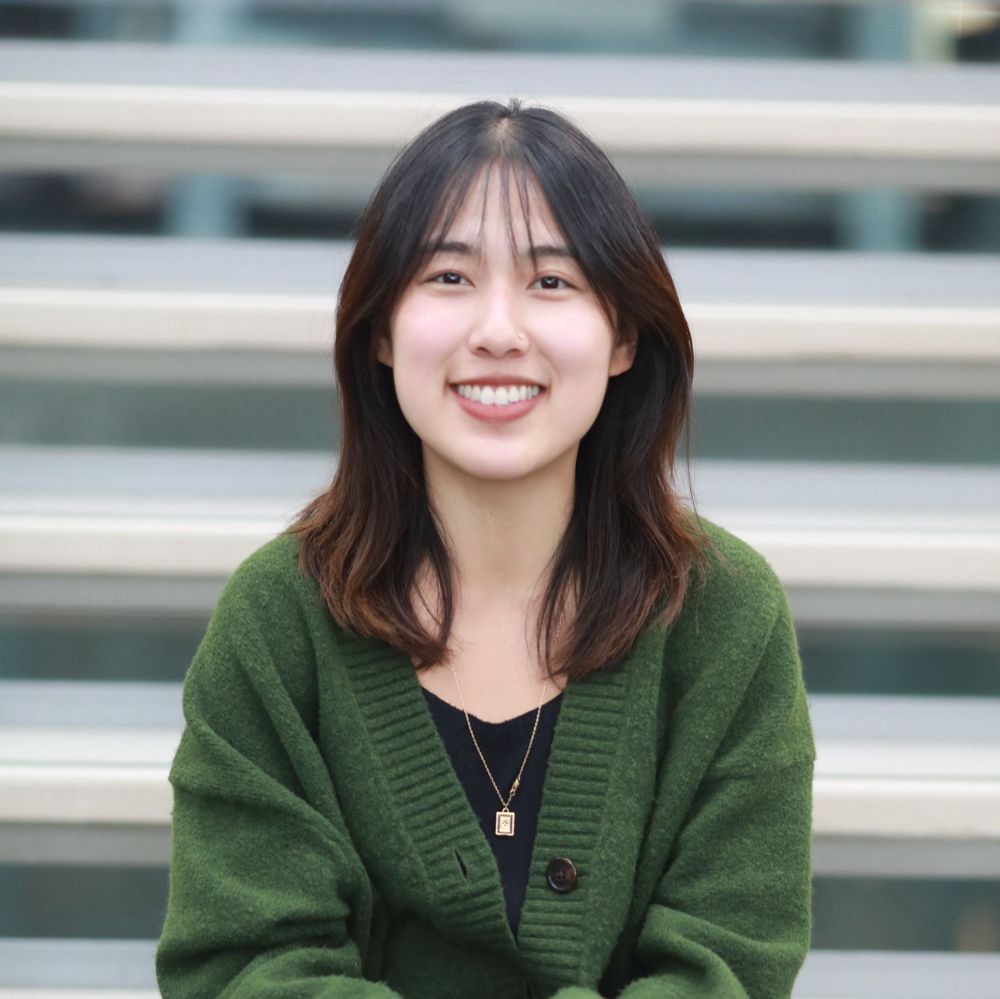
Dr Alyse Hung
Clinical psychologist, trained in expressive arts therapy
Between what’s said and unsaid
evidence-based, creative therapy, shaped around you.
I have a doctorate in clinical psychology and practise in the NHS and privately, seeing adults with the challenges of living between cultures, eating disorders, anxiety, depression and trauma. When words feel like too much or not enough, we can work through art, music, drama and imagery.
Taking new clients
HCPC registered · Online or in person in London, for adults · English, Cantonese and Hokkien
expertise & specialities
What people come to me with
Culture and identity
Third culture experiences, living between cultures, racial and cultural identity. I have lived and worked in Hong Kong, the UK, Tanzania and Australia.
Eating, food and body image
Including eating disorders, with evidence-based treatments such as CBT-E, CBT-T, CBT-AN-20, CBT-AR and MANTRA. My NHS work is in STRIDES, an early-intervention eating disorders service.
Mood, anxiety and stress
Low mood and depression, worry, stress, and feelings that are too much.
I also work with
- trauma and PTSD
- anger and strong emotions
- relationships and patterns that repeat
- changes and transitions
- bereavement and loss
- self-esteem
- OCD
- sleep problems
- substance use
- spirituality and meaning
- LGBTQ+ lives, sexuality and gender identity
- polyamory and ethical non-monogamy
Culturally sensitive and LGBTQ+ affirming. This isn’t a full list: if you’re not sure, ask me.
Approaches I draw on
- expressive arts therapy
- CBT
- for eating disorders: CBT-E, CBT-T, CBT-AN-20, CBT-AR (for ARFID) and MANTRA (for anorexia)
- compassion-focused therapy (CFT)
- acceptance and commitment therapy (ACT)
- mindfulness-based cognitive therapy (MBCT)
- DBT skills
- person-centred and integrative therapy
- trauma-focused therapy
After the assessment, we decide together what approach suits you best.
Training
- Doctorate in Clinical Psychology (ClinPsyD), University of East Anglia, 2021–2025
- Master of Expressive Arts Therapy, The University of Hong Kong
- BSc Psychology, Durham University
- Currently training in EMDR
- Registered with the HCPC, PYL047565
how I work
Talking, and the space beyond words
I work with both talking and nonverbal ways of exploring, and with what happens in between the two: what we say, and also how we say it, our pace, our posture, what shows up in a drawing or a gesture.
I believe that sometimes what we communicate nonverbally can speak louder than words, and that we all carry parts of ourselves outside our immediate awareness.
I understand that emotions can sometimes feel like a lot, and that words can feel insufficient. Depending on what feels comfortable and useful to you, we might use metaphor, imagery, games, dreams or other ways of exploring experiences that can be difficult to put into words.
Some of the ways in
Only if and when it helps.
Some feelings don’t change when we understand them. We can still change how we carry them.
therapy
One to one, or in a small group
Individual therapy
One to one · 50 minutes · online or in person · adults
Individual therapy offers a confidential, unhurried space to explore what is going on for you, such as living between cultures, changes and transitions, difficulties with food, eating and body image, relationships, anxiety, or a sense that something isn’t right but is hard to name.
I think of the therapy room a little like a studio, or a playroom: you can come as you are. We might talk the whole time. We might pick up a pen, a sound or a story when words run out. Creative ways in are an offer, never homework.
Fees
- Free consultationa short call to see if we’re a good fit, about 15 minutes
- £0
- Individual session50 minutes, weekly or fortnightly
- £120
Paying: due 24 hours before each session.
Cancelling: with 24 hours’ notice or more, there’s no charge. Later than that, the session is charged in full, unless I can fill the slot. If I cancel, you pay nothing.
Sessions are self-pay. I’m not registered with health insurers at the moment.
How we begin
After a free consultation, or straight away if you’d rather, you book your first session. From there, therapy usually goes something like this.
- 1
Getting to know you
An assessment over the first sessions: what’s going on, your history, and what you’d like to be different.
- 2
Making sense of it together
A shared picture of how things came to be, sometimes drawn as a timeline or a family tree.
- 3
The work itself
Weekly or fortnightly sessions, talking and making, at a pace that suits you.
- 4
Looking ahead
Towards the end, we gather what has helped and plan for harder days.
Group therapy
Small groups · 6 to 10 people
Small groups that bring together the arts, movement and mindfulness. They are a chance to make things alongside others, without needing to talk about yourself unless you want to.
Groups I’m planning:
- ongoing reflective groups, using creativity
- creative meetups
- walking groups
- drama-based groups
- groups for managing strong emotions
Fees
- Group sessionper person, about an hour
- £70
Next group: dates to be announced. Join the list and I’ll tell you when they’re set.
community
Beyond the therapy room
Some of my favourite work happens outside the therapy room: making things with people in community spaces, festivals, universities and workplaces.
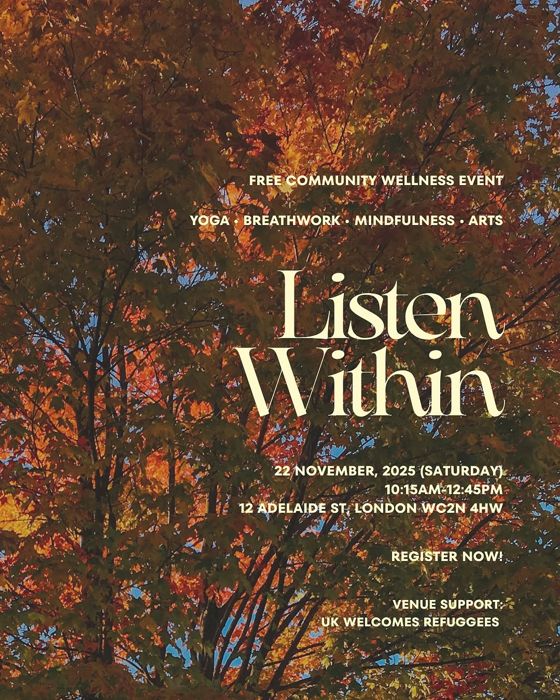
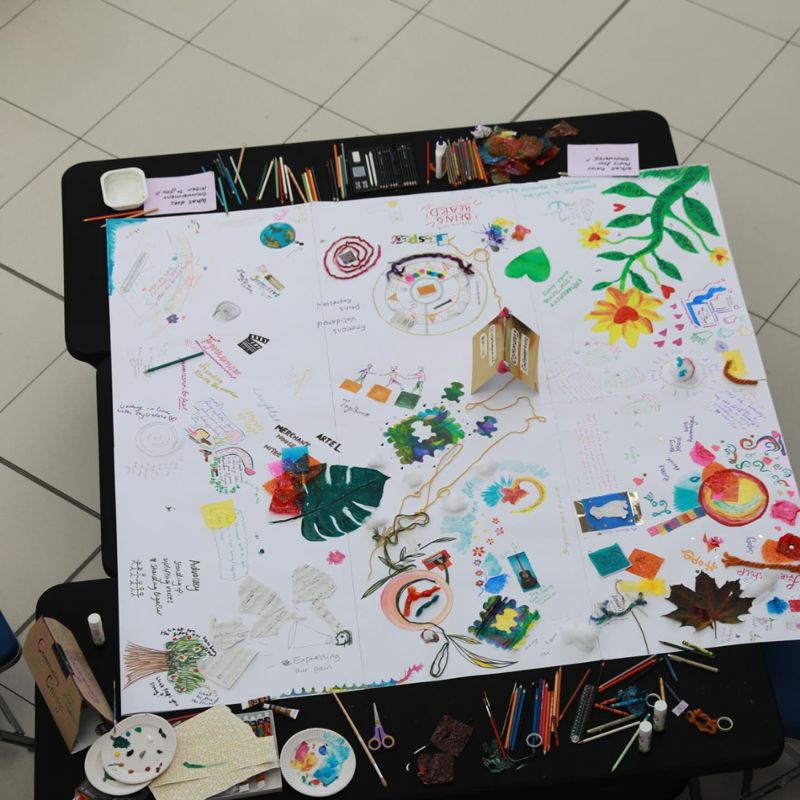
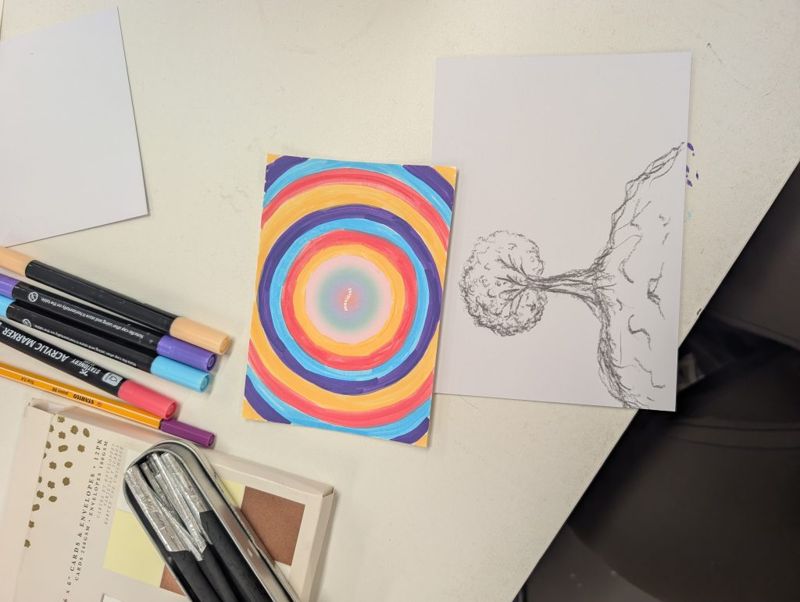

Let’s make something together
I’m open to collaborating with artists and other creatives, with organisations and community groups, and with fellow practitioners.
That could be a workshop, a talk, a group, an event or a creative project.
More on Instagram and Threads: @inbetweenmind
And also
- Sep–Nov 2026Living with emotions. A 10-week online course in Cantonese: community psychoeducation, not therapy.
- May 2026Between two worlds. An expressive arts, narrative and drama workshop on home and self, in Cantonese, for Hongkongers in the UK. With PALHK, at Canada Water Library.
- Feb 2026Imperial College London. Outreach to raise awareness of eating disorders.
- Jan 2026Career panel. Speaker at a PALHK online panel on clinical psychology careers in Hong Kong and the UK.
- Dec 2025Psychological first aid. Volunteered with UK-registered Hong Kong clinical psychologists, offering support after the Tai Po fire.
- During CovidOnline creative groups. A year of online creative arts groups, informed by ACT.
- Hong KongCommunity and workplace workshops. Workshops on stress, managing emotions, creativity and team building, for community groups, universities and companies.
about
Moving between places and cultures
Moving between places and cultures has shaped my longstanding curiosity about people, culture, spirituality, psychology and philosophy.
why inbetweenmind
Many of the people who come to me are third culture. They have grown up or lived between different countries and cultures, and never feel they quite fit in, in one place or the other. inbetweenmind is named for that in-between state, and for the space between what’s said and unsaid.
I warmly welcome people from all cultures, communities, and subcultures.
I have been curious about people, minds and emotions for as long as I can remember. When I was about 20, a mindfulness retreat in France changed my life. It showed me how much there is to be grateful for, and I wanted to help other people find meaning in their own lives. For a while I even thought about staying on at the monastery as a nun.
I chose psychology instead, and have lived and worked in Hong Kong, the UK, Tanzania and Australia. In Tanzania there were almost no mental health services. Going into schools to give mental health training showed me how much it helps to learn coping tools early, before things get hard.
Art, music and photography have always been part of my life, so I trained in expressive arts therapy to see how they could meet psychology. It changed how I think about therapy: less like a clinic, more like a playroom, where we can find meaning by doing as well as talking.
Outside work
Music is my language, and my recent discoveries have taken me through ambient music, nu-jazz and techno.
I also love hiking, travelling and taking photographs.
clinical experience
A decade in mental health across the UK, Hong Kong and Africa
- NHSSTRIDES, an early-intervention eating disorders service, plus young people’s eating disorders, community, inpatient and early intervention in psychosis teams
- Hong KongExpressive arts in schools, care homes, community centres and stroke rehabilitation, including a stroke choir
- ResearchA citywide mental health curriculum for Hong Kong secondary schools, and a trial of metacognitive training for psychosis and depression
- TanzaniaA year with a mental health service: research, supporting the local team, and mental health training in schools
- TeachingUniversity teaching, and training teachers to deliver mental health lessons
- Every ageFrom babies to older adults, in hospitals, schools, care homes and community spaces
More about my clinical experience
In the NHS
- STRIDES, an early-intervention eating disorders service
- a young people's eating disorders team
- community mental health
- inpatient wards
- early intervention in psychosis
- learning disability services
- substance misuse services
Expressive arts, Hong Kong
- schools
- care homes
- community centres
- people with physical disabilities
- stroke rehabilitation, including a stroke choir
- people who find feelings hard to name (alexithymia)
- every age, from babies to older adults
Research and teaching
- a citywide mental health curriculum for Hong Kong secondary schools: writing it, training teachers to deliver it, and evaluating it
- a randomised trial of metacognitive training for psychosis and depression
- a mood-tracking app used in a clinical trial
- suicide prevention, substance misuse and social media research
- a report on the social and economic costs of drug abuse in Hong Kong
- university teaching
Further afield
- a year with a mental health service in Tanzania: research, supporting the local service, and mental health training in schools
- early work with young children, including children with ADHD and autism
- neuropsychology research
questions
Things people often ask
Do I have to do art?
No. Many sessions are mostly talking, and creative ways in are an offer, never homework. You don’t need to be good at art.
What happens in the first session?
We start getting to know each other: what’s brought you here, a little of your history, and what you’d like to be different. It’s a standard 50-minute session, and you don’t need to prepare anything.
Is what I say confidential?
Yes, with a few limits that I’ll explain at the start, mainly if I’m worried about your safety or someone else’s.
Do I need a GP referral?
No. You can get in touch with me directly.
Do you offer anything besides one-to-one therapy?
Yes. I run small groups, community events and workshops, and give talks. See Group therapy and Community above. Community events are not therapy.
Can I use my health insurance?
Not at the moment. Sessions are self-pay.
contact
You don’t need to be sure what’s wrong to get in touch.
Book a free consultation
A short call, about 15 minutes, to talk about what’s bringing you and whether working together feels right. No commitment.
Ready to start? You can also book your first session straight away.
I can’t respond to urgent messages. If you need help now: call 999 or go to A&E if a life is at risk; you will not be wasting anyone’s time. Call NHS 111 and choose the mental health option. Call Samaritans free on 116 123, any time. Text SHOUT to 85258.